
Kashmir Pilgrimage Guide 2026
Sacred Places in Kashmir:
Gurdwaras & Temples of Jammu, Kashmir & Ladakh
From the Guru’s footsteps in 1516 to the naturally formed Ice Lingam of Amarnath — this is your complete guide to the most sacred Sikh and Hindu shrines across J&K.
🛕 10 Temples
🗺 Kashmir · Jammu · Ladakh
🍽 Free Langar Info
📅 Updated June 2026
Jammu & Kashmir is not only India’s most stunning landscape — it is one of its deepest wells of spiritual heritage. Sikh Gurus walked through this valley in 1516 and 1620. Hindu temples built by Kashmiri kings in the 8th century still stand. The Ice Lingam of Amarnath has drawn pilgrims for centuries. Mata Vaishno Devi draws millions every year. And on the Srinagar–Leh highway, an Army-maintained Gurdwara sits at 12,000 feet where Guru Nanak is said to have stopped a falling boulder with his hand.
This guide brings together both traditions — the 10 most important Gurdwaras and the 10 most important temples across the region — in one place, with real photos, accurate visitor information, and honest tips for making the most of each visit.
— Local heritage guide, Srinagar
Part I — Gurdwaras in Jammu & Kashmir
Srinagar · Kashmir
Gurdwara Chatti Patshahi
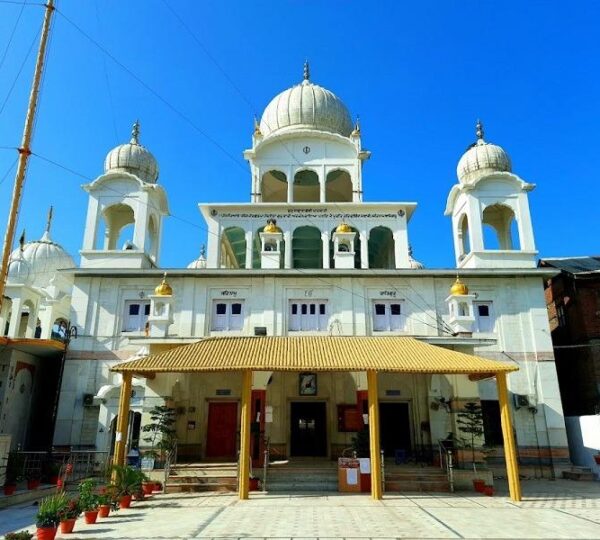
The most important Sikh shrine in all of Kashmir. “Chatti Patshahi” means Sixth Throne — built in memory of Guru Hargobind Sahib Ji’s visit in 1620 CE. Located beside the historic Hari Parbat Fort, its white domes overlook the Jhelum River. J&K observes a gazetted public holiday on Guru Hargobind’s Parkash Utsav — the only state outside Punjab to do so. Free langar and stay available 24 hours.
✦ Combine with Hari Parbat Fort and Mughal Gardens — all within 10 minutes of each other.
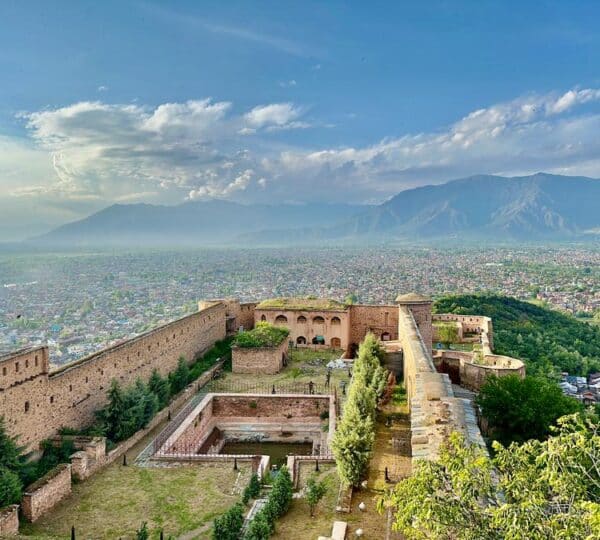
Hari Parbat hill and fort in Srinagar — Gurdwara Chatti Patshahi stands at the southern gate of this ancient fort. The Gurdwara’s white domes are visible from across the old city. 📍 Rainawari, Srinagar
Gurdwara Mattan Sahib
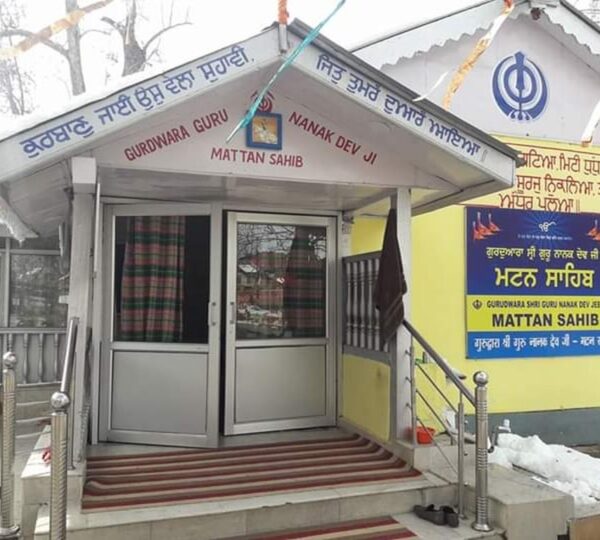
Built where Guru Nanak Dev Ji rested in 1516, this Gurdwara in the ancient pilgrimage town of Mattan sits on ruins of older Hindu temples — a layered site where Sikh and Hindu heritage meet. The legend tells of Guru Nanak humbling a proud scholar with a simple verse. Both Sikh and Hindu devotees pay homage here. 60 km south of Srinagar on the Pahalgam road.
✦ The ruined Martand Sun Temple is just 8 km away — combine both in a single South Kashmir heritage drive.
Gurdwara Guru Nanak Sahib — Awantipura
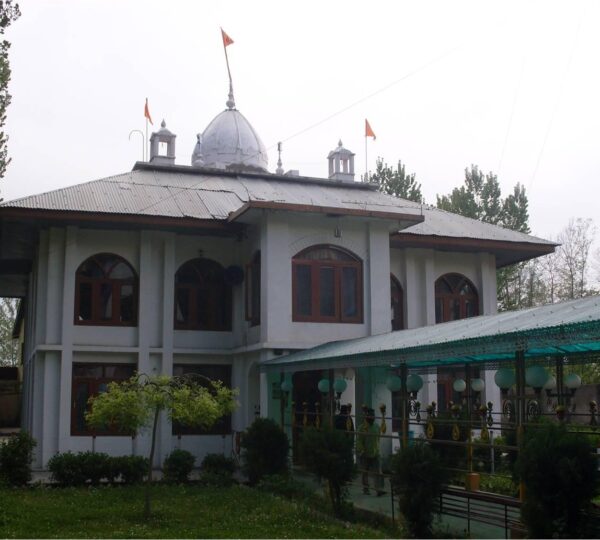
Marks the spot where Guru Nanak Dev Ji rested and met Shaivite saints in 1516, 29 km from Srinagar on the highway to Pahalgam. Built adjacent to the 9th-century Awantishwara temple ruins — creating a remarkable dual heritage site that almost no tourists know about. Open 24 hours and easily combined with any Pahalgam day trip.
✦ Stop here on any Pahalgam day trip — it adds only 15 minutes and is one of J&K’s most layered heritage sites.
Gurdwara Singh Sabha — Lal Chowk
Located in the heart of Srinagar’s most famous commercial centre, this Gurdwara has served the city’s Sikh community for generations. The most convenient Gurdwara for tourists exploring Srinagar city — a peaceful sanctuary in the middle of a busy market. Langar served daily. A short walk from the Jhelum River promenade and Lal Chowk clock tower.
✦ Best visited during morning prayers. Combine with Old City walking tour, Jama Masjid, and Jhelum riverfront.
Gurdwara Chhevin Patshahi — Baramulla
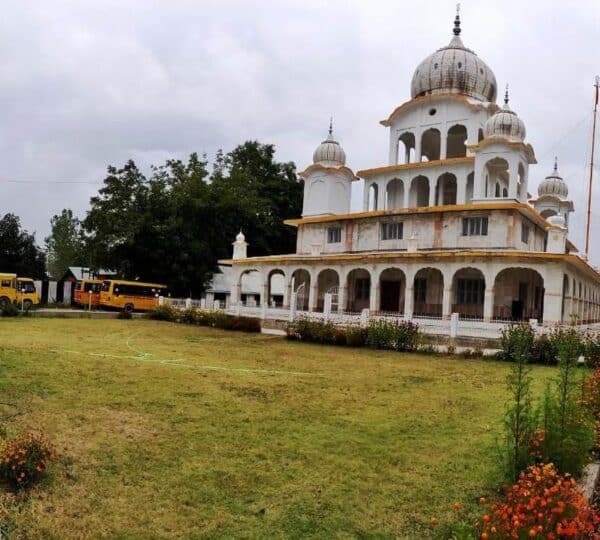
On the banks of the Jhelum River, 55 km northwest of Srinagar, this shrine commemorates Guru Hargobind Sahib Ji’s visit to Singhpura village. Also called Thara Sahib, it draws Sikh pilgrims from across the region. Baramulla is the gateway to Gulmarg — making this a natural stop on the Srinagar–Gulmarg drive.
✦ Stop here on the drive to Gulmarg — Baramulla is directly on route and adds barely 15 minutes.
Gurdwara Pathar Sahib — Leh
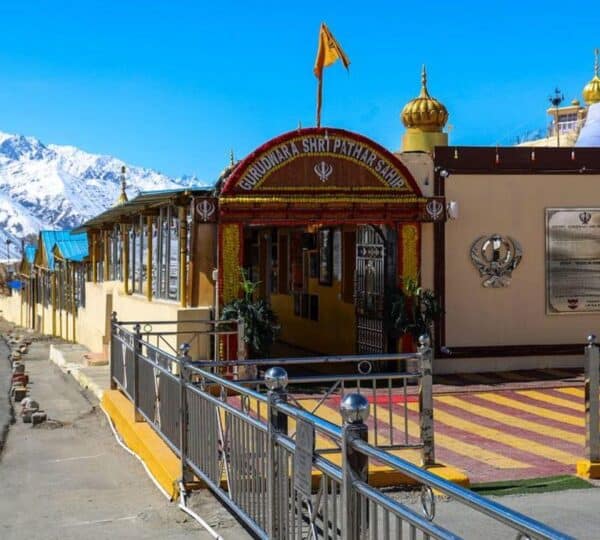
At 12,000 feet on the Srinagar–Leh highway, this gleaming white Gurdwara was built in 1517 to mark Guru Nanak Dev Ji’s visit to Ladakh. A boulder rolled by a demon was stopped by the Guru — the impression of his back still visible in the “Pathar” (stone). Maintained by the Indian Army, who also serve langar daily to all passing travellers. An unforgettable sight on an already extraordinary highway drive.
✦ Every Srinagar–Leh traveller passes this. Stop, eat langar, and absorb one of India’s most extraordinary spiritual settings.
Gurdwara Singh Sabha — Leh City
In the heart of Leh’s main bazaar, this Gurdwara serves Sikh travellers and pilgrims arriving in Ladakh from Punjab and beyond. The sight of a Nishan Sahib (Sikh flag) flying among Leh’s Buddhist monasteries and prayer flags is a beautiful emblem of India’s pluralism. Offers langar and basic free accommodation — a genuine lifeline for budget travellers.
✦ A wonderful place to rest and eat after the Srinagar–Leh drive. Combine with Leh Palace, Shanti Stupa, and the Ladakh market.
Part II — Temples in Jammu & Kashmir
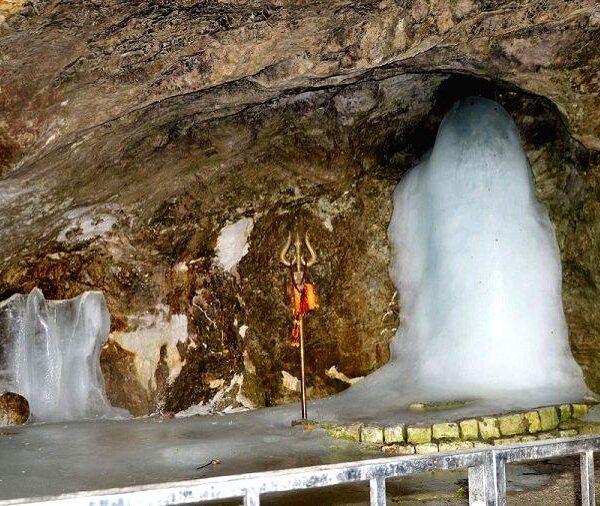
One of Hinduism’s holiest shrines — a natural cave at 3,888 metres (12,756 ft) housing a naturally formed Ice Lingam of Lord Shiva, said to wax and wane with the lunar cycle. The annual Amarnath Yatra draws hundreds of thousands of pilgrims. Two trekking routes: Pahalgam Route (36 km, 3 days) and the shorter Baltal Route (14 km). Medical fitness certificate required. Open July – August only.
✦ Book yatra registration well in advance — slots fill fast. Read our full Amarnath Yatra 2026 guide for route, registration, and tips.
Shankaracharya Temple — Srinagar
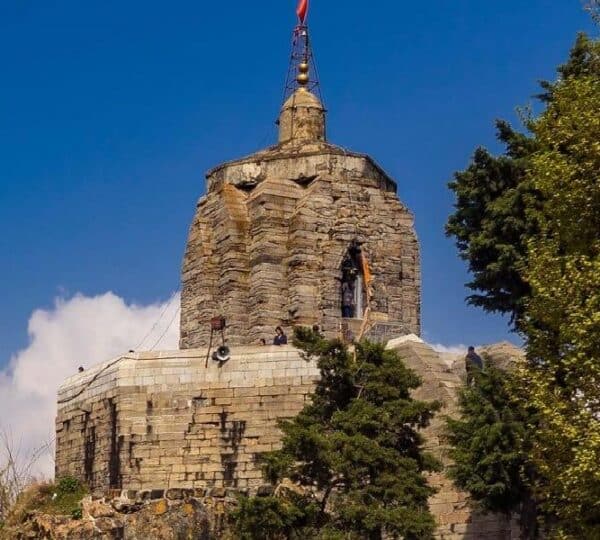
Perched 1,000 feet above Srinagar on Shankaracharya Hill, this ancient Shiva temple dates back over 2,500 years. Adi Shankaracharya, the great philosopher, is said to have meditated here in the 8th century. The 360-degree view of Dal Lake, the Jhelum Valley, and the Pir Panjal range from the summit is one of Kashmir’s finest. A must-visit for both spiritual and scenic reasons.
✦ Sunrise visit gives the best mountain visibility. Combine with Mughal Gardens and an evening shikara on Dal Lake.
Martand Sun Temple
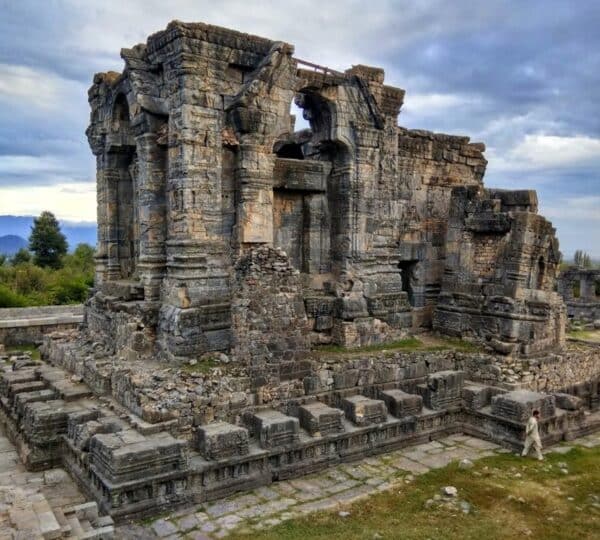
Built by King Lalitaditya Muktapida in the 8th century CE, dedicated to Surya the Sun God. Even in ruin, Martand is extraordinary — vast columns, intricate carvings, and the grand scale of ancient Kashmiri architecture spread across a plateau overlooking the Lidder valley. One of India’s most visually striking and historically significant ancient sites. Open for all visitors year-round.
✦ Combine with Gurdwara Mattan Sahib (8 km away) and Pahalgam (30 km further) for a perfect South Kashmir heritage day.
Kheer Bhawani Temple
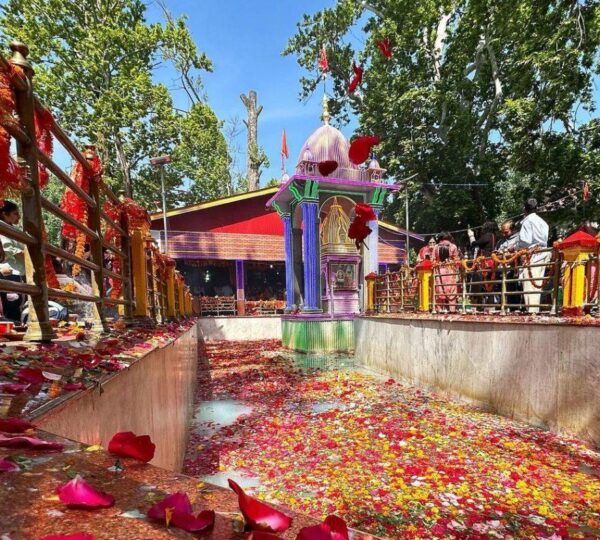
The most sacred Devi temple for the Kashmiri Pandit community. Built over a sacred spring in Ganderbal district, the water of the spring is said to change colour as an omen — from milky white to red, black, or blue. The spring is fed with milk and rice (kheer) as an offering — hence the name. The annual festival of Kheer Bhawani draws thousands of Kashmiri Pandit pilgrims from across India every year.
✦ The Jyeshtha Ashtami festival (May–June) is the most vibrant time to visit — thousands gather in a moving celebration of Kashmiri Hindu culture.
Maharani Temple — Gulmarg
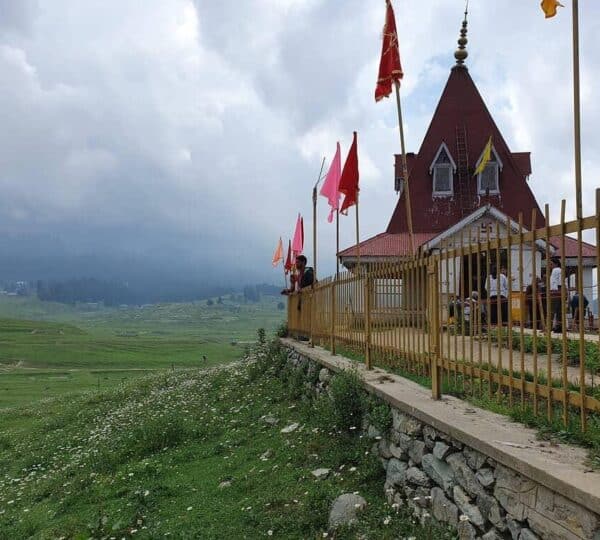
Perched atop a small hill in Gulmarg with its distinctive bright red roof and classic Hindu architecture, the Maharani Temple is dedicated to Lord Shiva and Goddess Parvati. Built by Maharani Mohini Bai Sisodia, wife of Maharaja Hari Singh, in the early 20th century. The temple’s red roof against Gulmarg’s snow-capped peaks and green meadows is one of Kashmir’s most photographed scenes.
✦ Visit in the morning before the Gondola queue builds. The temple offers a spiritual start to an adventure day in Gulmarg.
Wangath Temple (Naranag) — Ganderbal
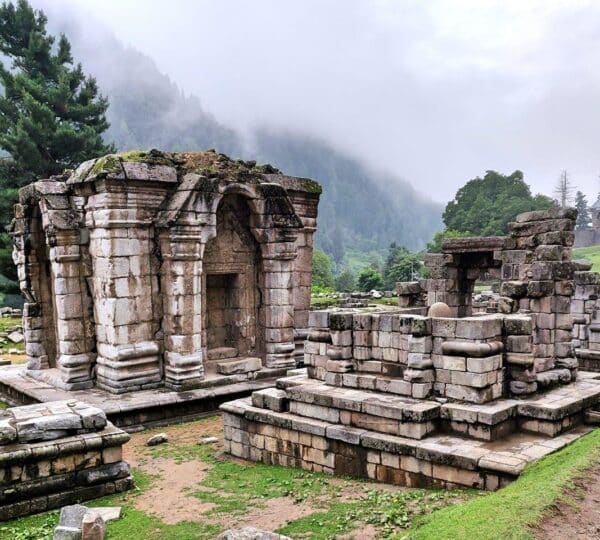
Also known as the Naranag Temples — a stunning 8th-century complex of multiple stone shrines built by King Lalitaditya of the Karkota dynasty, surrounded by forests and the Wangath River. Intricate carved pillars and massive stone blocks stand largely undiscovered by tourists, making this one of Kashmir’s finest offbeat heritage experiences. Also the trailhead for the Gangabal Lake trek.
✦ An ideal offbeat day trip — combine with the scenic drive through Wangath village. Very few tourists, extraordinary ruins.
Avantiswami Temple — Awantipura
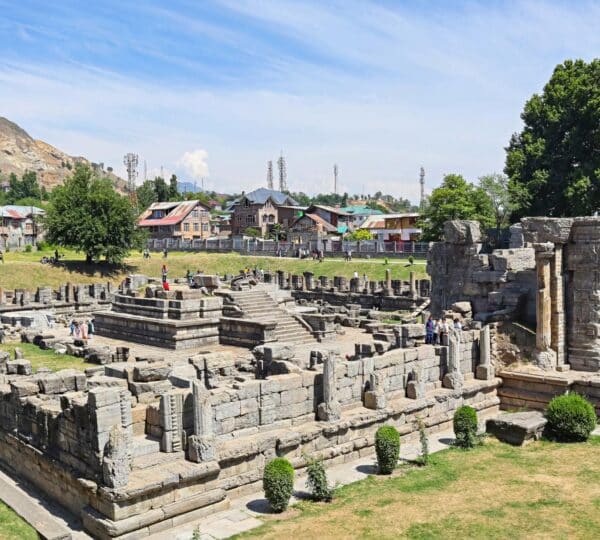
A 9th-century Vishnu temple built by King Avantivarman of the Utpala dynasty. Now in ruins but hauntingly beautiful — intricate carvings of Hindu deities still visible across the sandstone columns and courtyard. Located 29 km from Srinagar directly on the Pahalgam highway, adjacent to Gurdwara Guru Nanak Sahib — making this the most concentrated heritage double-stop in J&K.
✦ The Gurdwara and this temple ruins are literally next to each other — the most unique Sikh-Hindu heritage pairing in the valley. Stop on any Pahalgam day trip.
Mata Vaishno Devi Temple
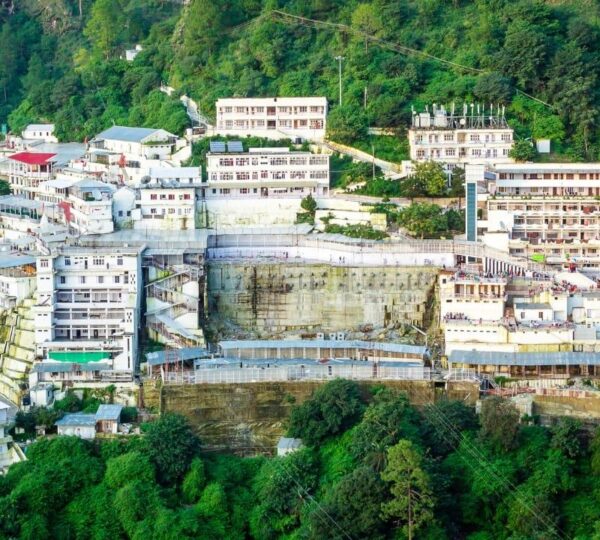
One of India’s most visited sacred sites — millions of pilgrims per year. Located in the Trikuta Mountains, 60 km from Jammu, at 5,000 feet. The 14-km uphill trek from Katra base camp leads to the cave where three natural Pindis represent Kali, Lakshmi, and Saraswati. Helicopter service available from Banganga to Sanji Chhat. The atmosphere during Navratri is extraordinary.
✦ Book yatra registration online in advance. Navratri is the most vibrant but most crowded time — early mornings offer the best darshan experience.
Sharika Chakreshwar Temple — Hari Parbat
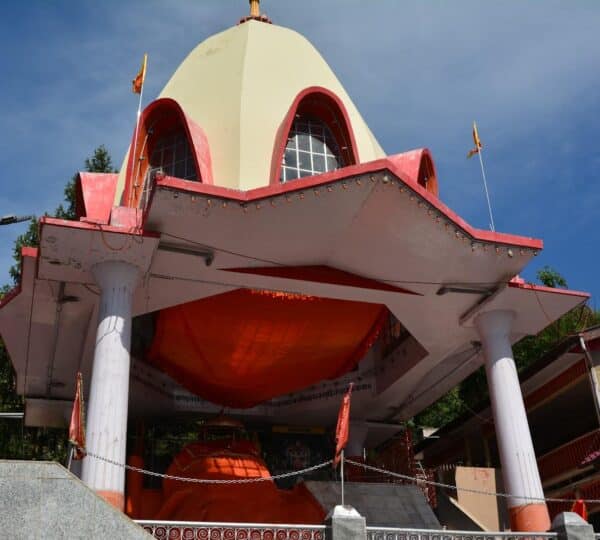
Atop Hari Parbat hill in Srinagar — one of the most sacred Hindu shrines in Kashmir, dedicated to Goddess Sharika, an incarnation of Durga and the presiding deity of the entire valley. An important Shakti Peetha revered by Kashmiri Pandits. Extraordinary views of Dal Lake, Srinagar city, and the Zabarwan range. Notably, Gurdwara Chatti Patshahi (G1) is at the same hill’s southern gate — making Hari Parbat the most spiritually layered single site in all of Kashmir.
✦ Visit both Sharika Temple (top of Hari Parbat) and Gurdwara Chatti Patshahi (southern gate) in the same visit — one hill, two great faiths.
Visitor Quick Guide — Tips for Both Traditions
🕌 At Gurdwaras
- Cover head at all times
- Remove shoes at entrance
- Accept langar with both hands
- No photography in sanctum
- All faiths welcome
- Donation is optional
🛕 At Temples
- Dress modestly (no shorts)
- Remove shoes before entry
- Women: carry a head scarf
- Ask before photographing
- Offerings from stalls nearby
- Weekdays are quieter
🚗 Getting Around
- Book a local cab for heritage circuit
- Pathar Sahib on Leh highway (no detour)
- Mattan + Martand + Pahalgam = one day
- Awantipura + Avantiswami = one stop
- Hari Parbat = Gurdwara + Temple
📅 Best Time
- Amarnath: July–August only
- Vaishno Devi: year-round
- Kashmir temples: Apr–Oct
- Pathar Sahib: May–September
- Navratri: most vibrant for all
🗺 Suggested 1-Day Heritage Circuit from Srinagar:
Morning: Shankaracharya Temple (sunrise) → Hari Parbat: Sharika Temple + Gurdwara Chatti Patshahi → Gurdwara Singh Sabha Lal Chowk
Afternoon: Drive to Awantipura: Gurdwara Guru Nanak Sahib + Avantiswami Temple ruins (both at the same stop)
Late Afternoon: Continue to Mattan Sahib Gurdwara + Martand Sun Temple (8 km apart)
Evening: Return to Srinagar via Pahalgam highway — sunset shikara on Dal Lake
Total drive: ~140 km. Easily done with a Kashmir Tickets cab.
Frequently Asked Questions
Which is the most important Gurdwara in Kashmir?
Gurdwara Chatti Patshahi in Srinagar — built in memory of Guru Hargobind Sahib Ji’s visit in 1620 CE, located beside Hari Parbat Fort. Open 24 hours with free langar and accommodation. J&K is the only state outside Punjab to observe a public holiday for Guru Hargobind Sahib’s Parkash Utsav.
Which is the most famous temple in Kashmir?
The Amarnath Cave Temple is the most renowned — famous worldwide for its naturally formed Ice Lingam of Lord Shiva at 3,888 metres. The Shankaracharya Temple in Srinagar is the most visited year-round temple in the valley.
Can non-Sikhs visit Gurdwaras in Kashmir?
Absolutely. Gurdwaras welcome all faiths. Cover your head (scarves available at entrance), remove shoes, and accept langar respectfully. There is no entry fee at any Gurdwara.
Is there a place in J&K where a Gurdwara and Temple are at the same location?
Yes — Hari Parbat hill in Srinagar has the Sharika Chakreshwar Temple (sacred Hindu Shakti Peetha) at the summit, and Gurdwara Chatti Patshahi at the southern gate. And in Awantipura, the Gurdwara Guru Nanak Sahib and the Avantiswami Temple ruins are literally adjacent to each other on the Pahalgam highway.
Is free food (langar) available at Gurdwaras in Kashmir?
Yes — langar is served at all major Gurdwaras including Chatti Patshahi (Srinagar), Singh Sabha Lal Chowk, Pathar Sahib (Leh, served by the Indian Army), and Singh Sabha Leh. Chatti Patshahi and Singh Sabha Leh also offer free accommodation.
What is the best time to visit temples in Kashmir?
Amarnath is only open July–August. Most Kashmir valley temples are best from April–October. Vaishno Devi in Jammu is open year-round. Navratri (March–April and September–October) is the most vibrant time to visit any temple in J&K.
Plan Your Sacred Places Tour in Kashmir
We are local to Kashmir — we can build a custom pilgrimage itinerary covering Gurdwaras, temples, and Sufi shrines across J&K, with dedicated cabs, accommodation, and local guides.
More Kashmir Travel Guides